Introduction to Adobe Premiere Pro: Editing Your First Video Project
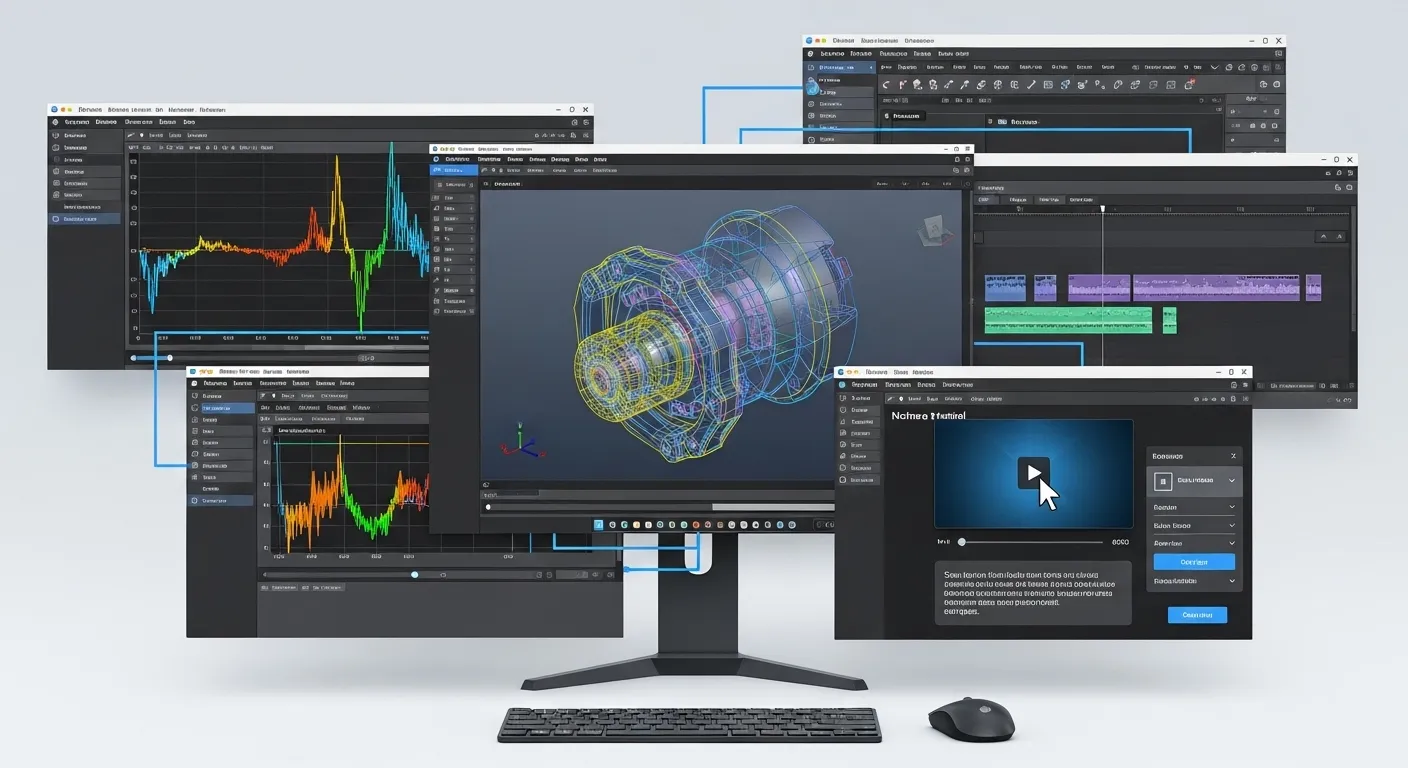
Introduction to Adobe Premiere Pro: Editing Your First Video Project
Embarking on your video editing journey can feel daunting, but with an introduction to Adobe Premiere Pro, you'll discover a powerful and intuitive tool that makes the process accessible and rewarding. This guide is specifically designed for beginners, walking you through the essential steps to confidently tackle editing your first video project. Premiere Pro is the industry standard for a reason, offering unparalleled flexibility and a robust feature set for everything from short social media clips to feature films. By understanding its core functionalities, you'll unlock your creative potential and bring your visual stories to life.
Key Points for Your First Video Project:
- Master the Premiere Pro interface and workspace.
- Learn efficient media import and organization techniques.
- Understand fundamental editing, trimming, and sequencing.
- Apply basic audio adjustments and visual enhancements.
- Successfully export your finished video for various platforms.
Getting Started with Adobe Premiere Pro: Interface and Setup
When you first open Adobe Premiere Pro, you're greeted by a sophisticated interface that might seem overwhelming. However, understanding its fundamental layout is the first step in editing your first video project. Premiere Pro's workspace is highly customizable, but it typically consists of several key panels:
- Project Panel: Your central hub for all imported media—video clips, audio files, images, and sequences. Keeping this organized is crucial for efficient workflow.
- Source Monitor: Used for previewing individual clips before adding them to your timeline, allowing you to set in and out points.
- Program Monitor: Displays your active sequence, showing exactly what your final video will look like.
- Timeline Panel: This is where the magic happens. You arrange, trim, and layer your clips, audio, and effects here.
- Tools Panel: Contains essential editing tools like the Selection Tool, Razor Tool, and Type Tool.
For beginners, starting with the "Editing" workspace is recommended, as it arranges these panels in a logical flow. You can access different workspaces via the "Window > Workspaces" menu. A clean setup helps streamline your introduction to Adobe Premiere Pro experience.
Importing and Organizing Your Media for Seamless Editing
The foundation of any successful video project lies in well-organized media. Before you start editing your first video project, you need to import your footage, audio, and any graphics.
- Importing Files:
- Drag and Drop: The simplest method is to drag files directly from your computer's file explorer into the Project Panel.
- File > Import: Navigate to your files and select them.
- Media Browser Panel: This panel allows you to browse your computer's directories and import files, particularly useful for camera media structures.
- Organizing with Bins:
- Think of "bins" in Premiere Pro as folders. Create new bins (right-click in Project Panel > New Bin) to categorize your media. Common bins include "Video," "Audio," "Music," "Graphics," and "Sequences."
- Effective organization saves immense time during the editing process, especially as projects grow larger.
A recent study by Post Production Hub (2024) highlighted that editors who spend 15-20% of their initial project time on media organization report a 30% increase in overall project efficiency. This underscores the importance of a structured approach right from your introduction to Adobe Premiere Pro.
Essential Editing Techniques: Building Your Narrative
With your media imported and organized, you're ready to dive into the core of editing your first video project on the timeline.
Creating Your First Sequence
A sequence is where you assemble your video. You can create one by:
- Dragging a clip from the Project Panel directly onto the empty Timeline Panel. Premiere Pro will automatically create a sequence matching the clip's settings.
- File > New > Sequence and manually choosing settings (e.g., 1080p, 24fps).
Basic Cuts and Trims
- Selection Tool (V): Used to select clips, move them around the timeline, and adjust their duration by dragging their edges.
- Razor Tool (C): Cuts clips into separate segments. Select the tool, click on a clip where you want to cut, then switch back to the Selection Tool to manipulate the new segments.
- Ripple Delete: After cutting a section, select the empty space (gap) and press Delete. This removes the gap and shifts all subsequent clips forward, maintaining the flow of your edit.
Enhancing Your Video: Audio, Transitions, and Basic Effects
Beyond basic cuts, Premiere Pro offers tools to refine your video's look and sound, crucial for a polished first video project.
Adjusting Audio Levels
Good audio is paramount.
- Clip Volume: In the Timeline, look for the horizontal line across your audio clips. Drag this line up or down to increase or decrease volume.
- Audio Gain: Right-click an audio clip > Audio Gain. This allows for more precise adjustments. Aim for audio levels that peak around -6dB to -3dB for dialogue to avoid distortion.
- For more advanced audio mixing, readers can explore related articles on audio post-production techniques.
Adding Transitions
Transitions smooth the shift between clips.
- Effects Panel: Navigate to "Video Transitions."
- Applying Transitions: Drag a desired transition (e.g., "Cross Dissolve") onto the cut point between two clips on the timeline.
- Use transitions sparingly and purposefully to avoid distracting your audience. A simple cross dissolve is often all you need for a professional look.
Basic Video Effects
Premiere Pro includes a vast library of effects.
- Effects Panel: Explore "Video Effects."
- Applying Effects: Drag an effect (e.g., "Lumetri Color" for color correction or "Crop") onto a clip in the timeline.
- Effect Controls Panel: Once an effect is applied, select the clip and go to the "Effect Controls" panel to adjust its parameters. This is where you fine-tune the effect's intensity and behavior.
Differentiated Insights: Efficient Workflows and Common Pitfalls
To truly elevate your introduction to Adobe Premiere Pro and ensure a smooth first video project, consider these insights:
- Proxy Workflow for Smoother Editing: Modern cameras often record in high-resolution, high-bitrate formats that can strain even powerful computers. Premiere Pro's proxy workflow allows you to create lower-resolution copies of your footage for editing, then automatically relink to the original high-resolution files for export. This significantly improves playback performance and responsiveness during editing, a feature increasingly critical as 4K and 8K footage become standard. This approach is recommended by leading post-production houses like Frame.io (2023) for optimizing project timelines.
- Mastering Keyboard Shortcuts: While the mouse is intuitive, professional editors rely heavily on keyboard shortcuts. Learning essential shortcuts (e.g.,
J-K-Lfor playback,IandOfor in/out points,Cfor Razor,Vfor Selection) can drastically speed up your editing process. Dedicate time to learning 5-10 new shortcuts each week, and you'll see a remarkable improvement in your efficiency. This is a simple yet powerful technique often overlooked by beginners.
Exporting Your Masterpiece: Sharing Your First Video Project
Once you've completed editing your first video project, the final step is to export it in a format suitable for sharing.
- Select Your Sequence: Ensure your timeline sequence is active.
- File > Export > Media (or
Ctrl+M/Cmd+M). This opens the Export Settings dialog. - Choose Your Format:
- H.264: The most common and versatile format for web and social media.
- Preset: Select a preset based on your target platform (e.g., "YouTube 1080p Full HD," "Vimeo HD," "Match Source - High Bitrate"). These presets optimize settings for quality and file size.
- Output Name and Location: Click the blue "Output Name" text to specify where your exported file will be saved and what it will be called.
- Queue vs. Export:
- Queue: Sends your project to Adobe Media Encoder, allowing you to continue working in Premiere Pro while your video renders in the background. Recommended for longer projects.
- Export: Renders the video directly from Premiere Pro, locking up the application until finished.
- Click Export (or Queue) to begin the rendering process.
FAQ: Your First Steps in Adobe Premiere Pro
Q1: How long does it typically take to learn the basics of Adobe Premiere Pro?
A1: Most beginners can grasp the fundamental interface and basic editing techniques within a few hours of dedicated practice. To confidently edit your first video project and understand core concepts like importing, cutting, and exporting, expect to spend 10-20 hours. Consistent practice is key to building proficiency and speed.
Q2: What are the minimum computer specifications needed for a smooth Premiere Pro experience?
A2: While Premiere Pro can run on various systems, for a smooth experience, especially when editing your first video project with HD footage, a modern multi-core processor (Intel i7 or AMD Ryzen 7 equivalent), at least 16GB of RAM, a dedicated GPU (NVIDIA or AMD), and an SSD for your operating system and media are highly recommended. Adobe's official system requirements (updated 2025) provide detailed guidelines.
Q3: Can I use Premiere Pro for free to try it out before buying?
A3: Yes, Adobe offers a 7-day free trial for Premiere Pro. This trial provides full access to all features, allowing you to get a comprehensive introduction to Adobe Premiere Pro and even complete a small first video project before committing to a subscription. It's an excellent way to determine if the software meets your needs.
Q4: What's the difference between a "cut" and a "ripple delete" in Premiere Pro?
A4: A "cut" (using the Razor Tool) simply divides a clip into two segments, leaving a gap if you remove one segment. A "ripple delete," however, not only removes the selected clip or gap but also automatically shifts all subsequent clips on the timeline to fill the void. This maintains the synchronization of your edit and is incredibly useful for efficient workflow when **editing